Product Design — from complex problems to three shipped products
Summary: A selection of enterprise and B2B SaaS products where I led product design across complex workflows, legacy systems, and early-stage MVPs.
-> improving the existing product, building new features.
-> Building a bespoke M&A product for a custom client.
-> Building a feedback & roadmap tool.
Clinked Client Portal — SaaS
Improving the Prospect & User Experience
Role
First design hire (sole designer) on B2B SaaS product
Own design across all product stages
Help Marketing achieve goals (website, social, campaigns).
Challenge
Low UX maturity -> business and development driven culture; Sales and Client Success as the only access for user input.
Contribution & achievements
Improved Prospect Journey: prioritized key pain points for main persona, improved consistency across whole prospect journey (social, blog, website, sign-up and trial flow).
Improved & Added to Product Experience: shipped weekly usability improvements (kpi); improved existing features based on user feeedback and created new features based on user requests, within strategic roadmap objectives.
Clinked was an environment resistant to qualitative research and testing. When I joined Clinked, I was only allowed to interview people inside our team. To understand the key users, I ran interviews with roles dealing directly and on a daily basis with prospects and customers. I documented needs, behaviours, pain points of Super Admins (SA), usually the main point of contact between Clinked and SA's teams and customers. SA are also directly responsible for platform adoption. I managed to isolate what UX alone can improve.
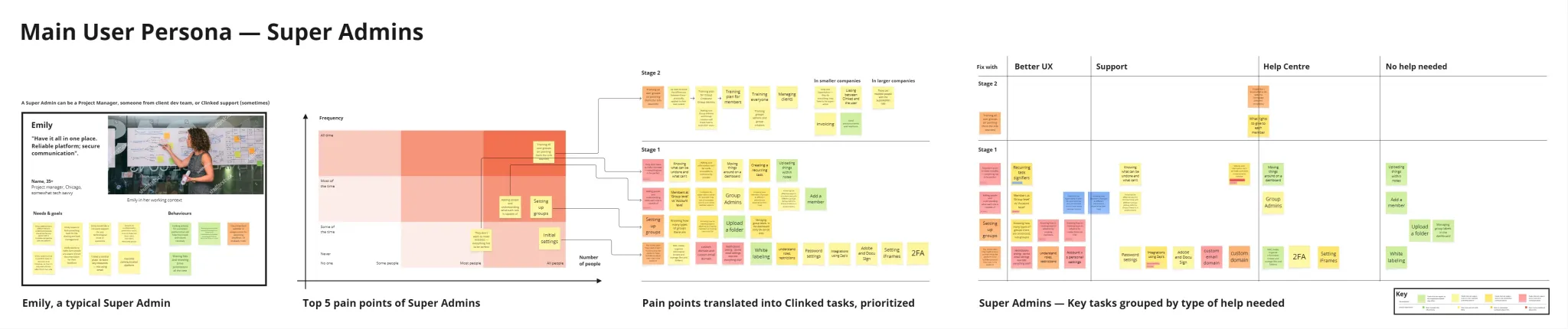
Above: Pain points of Super Admins, translated into granular Clinked tasks, prioritized and groupped into how/when they are fixable.
Problem
The prospect journey (social, blog, web, sign-up, trial) lacked industry-specific content and was visually inconsistent, reducing prospect trust in Clinked brand.
Solution
I ran a consistency audit to demonstrate fragmentation eroding trust. I then created brand and content design guidelines to help team keep communication on-brand.
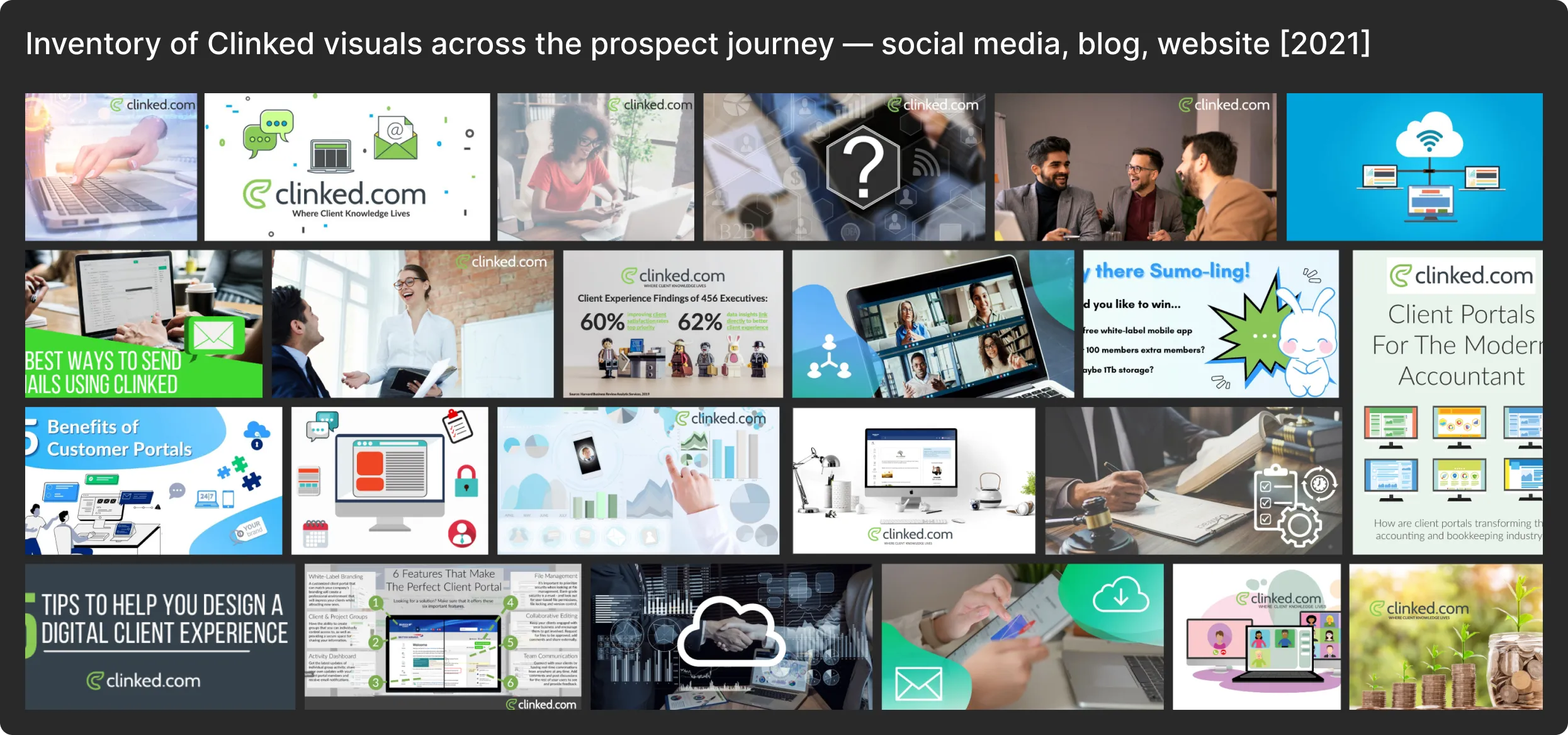
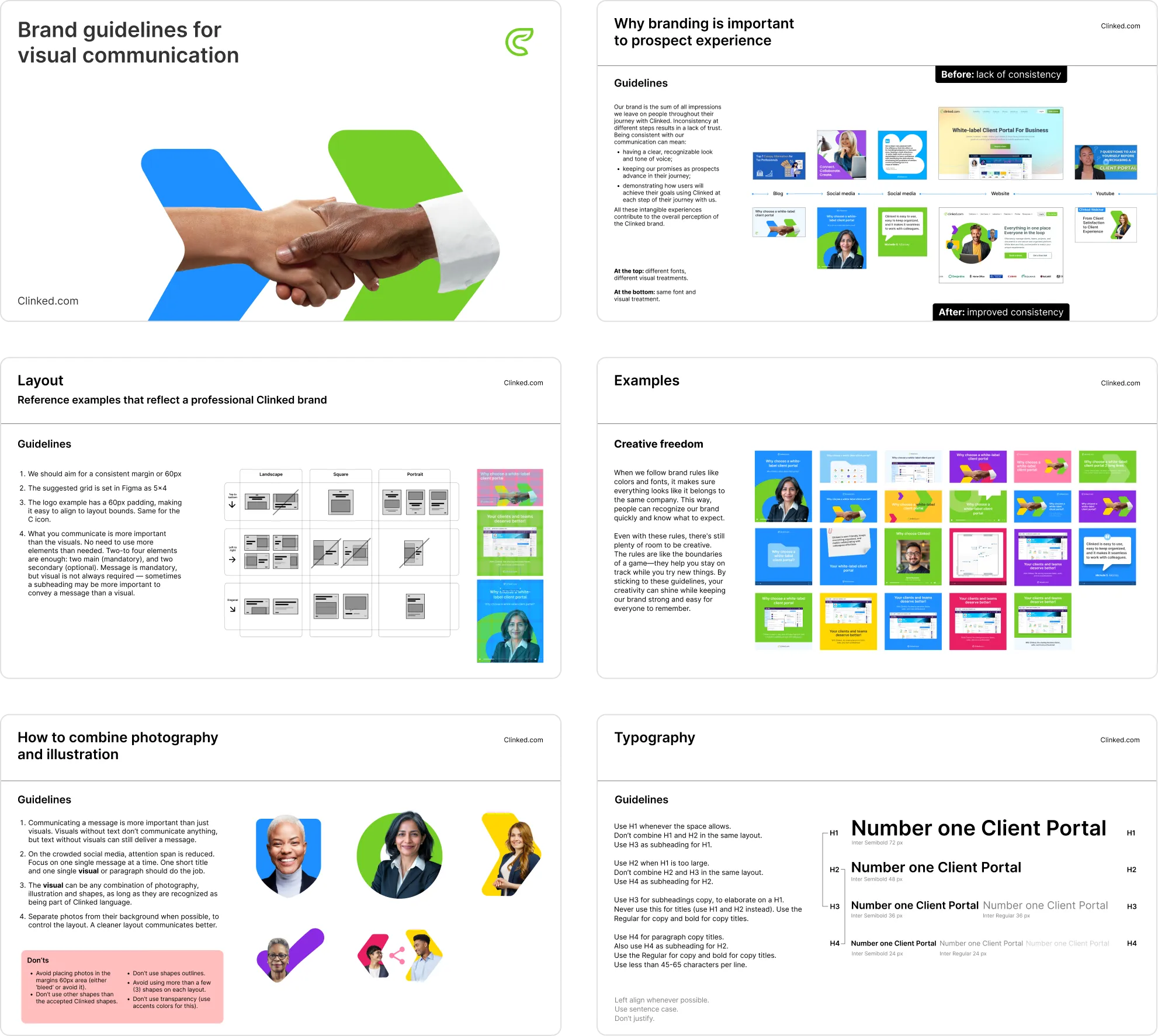
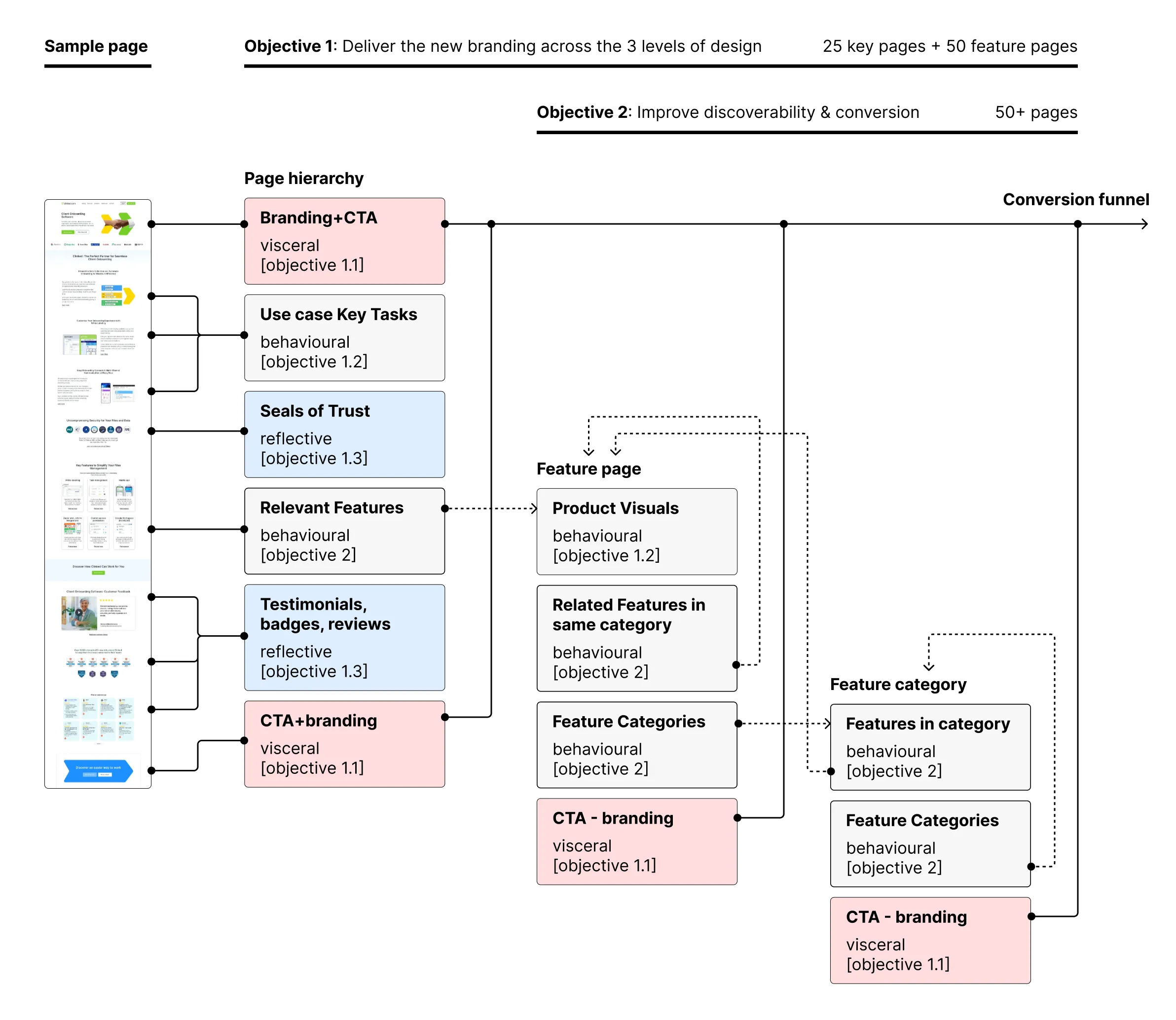
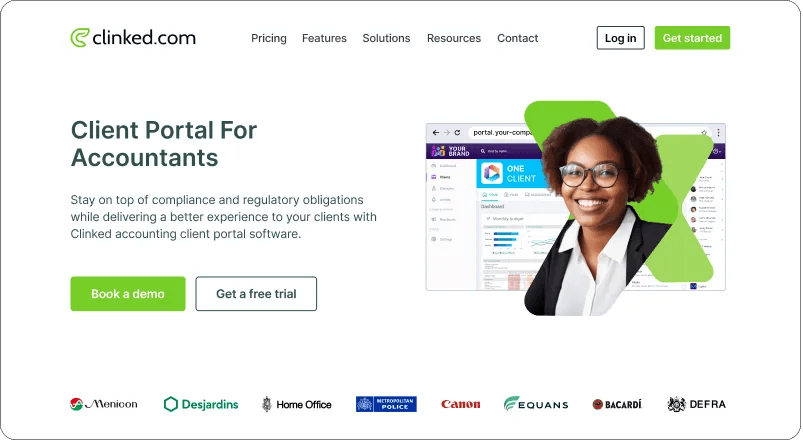
Above: Consistency audit / A new Clinked brand guidelines / Content & visual strategy / Branding the typical landing page on clinked.com
Problem
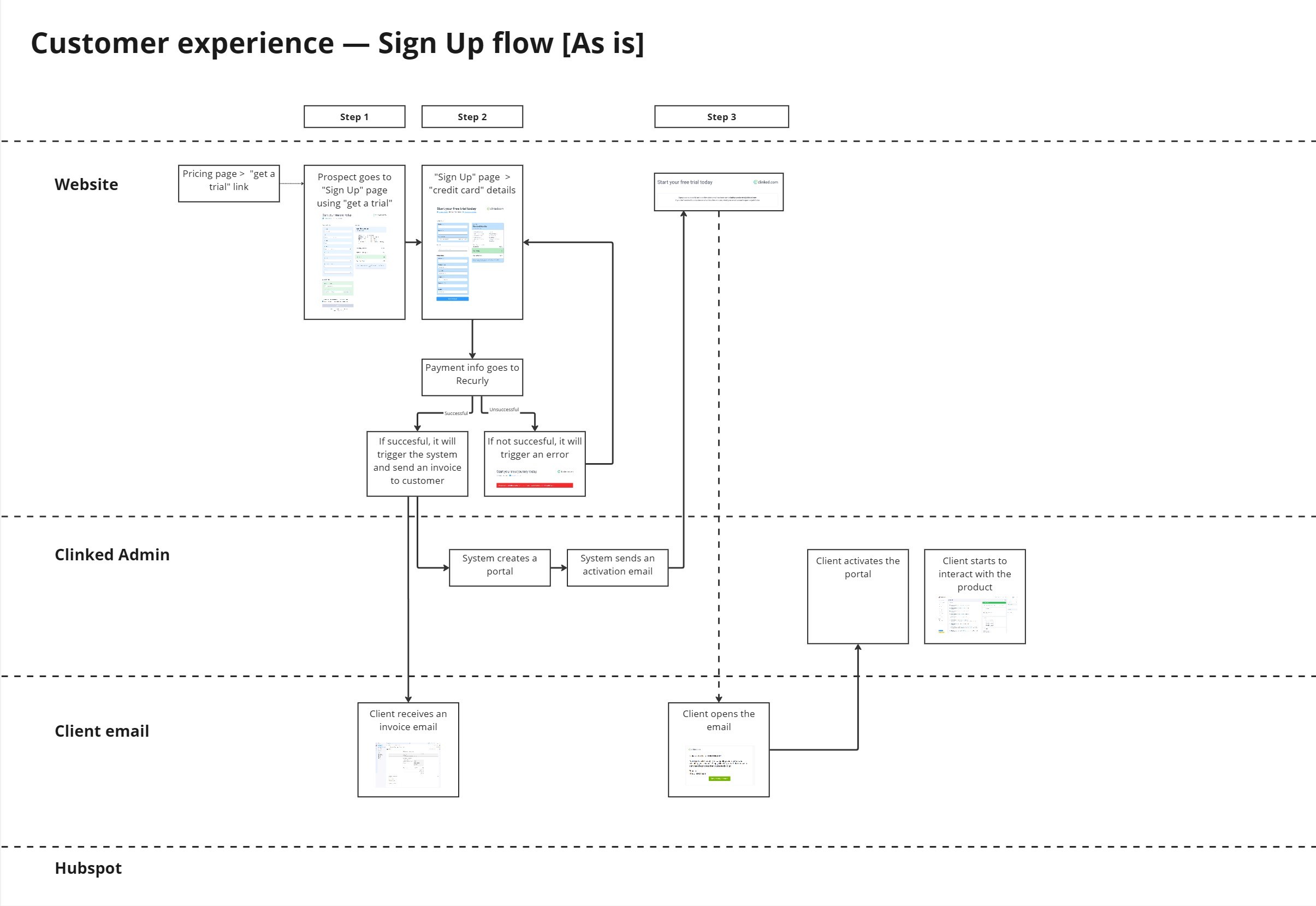
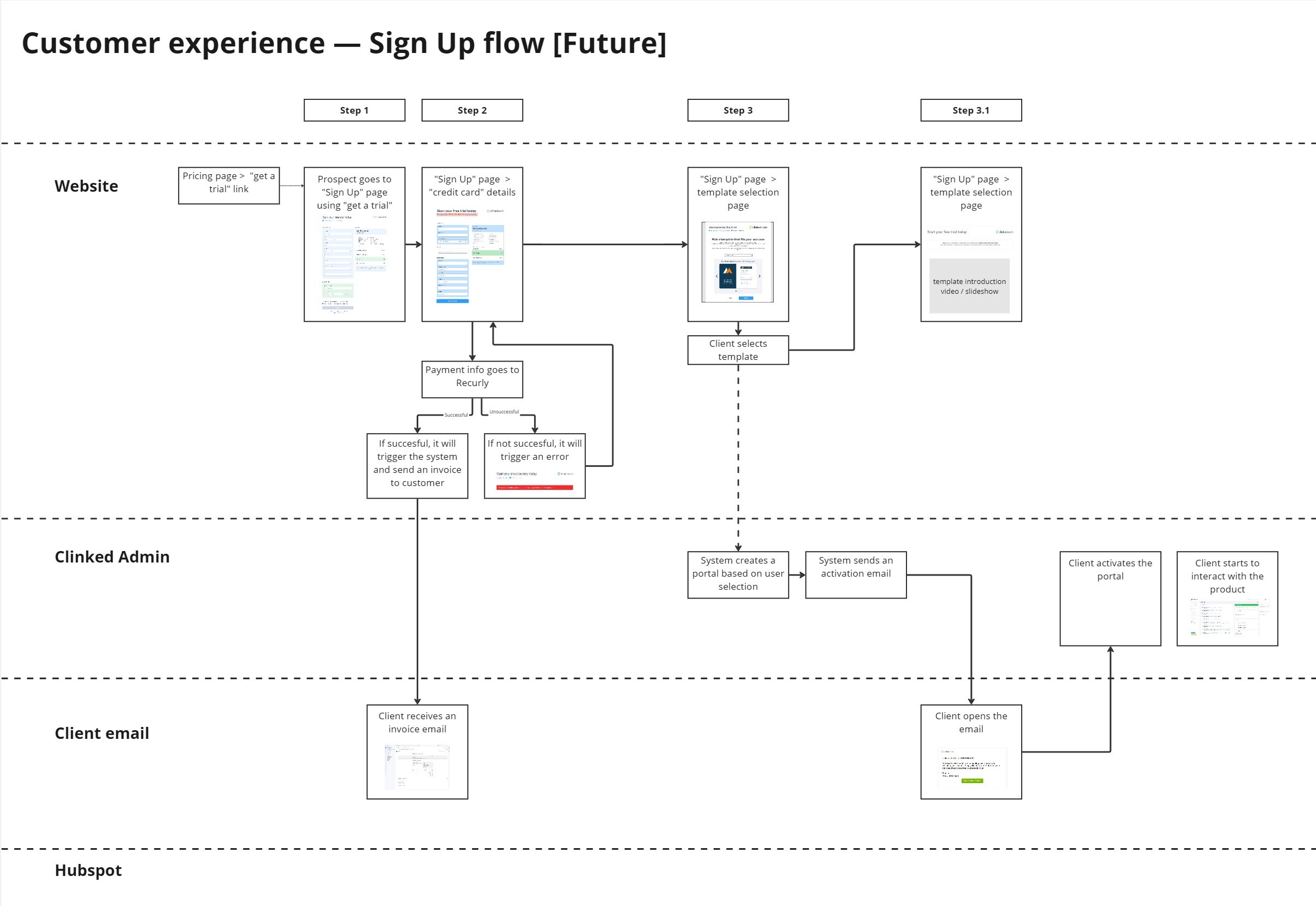
Clients from a specific industry need a customized trial experience to reflect their domain terminology.
Solution
We created dedicated use-case environments that prospects can opt for when signing up.
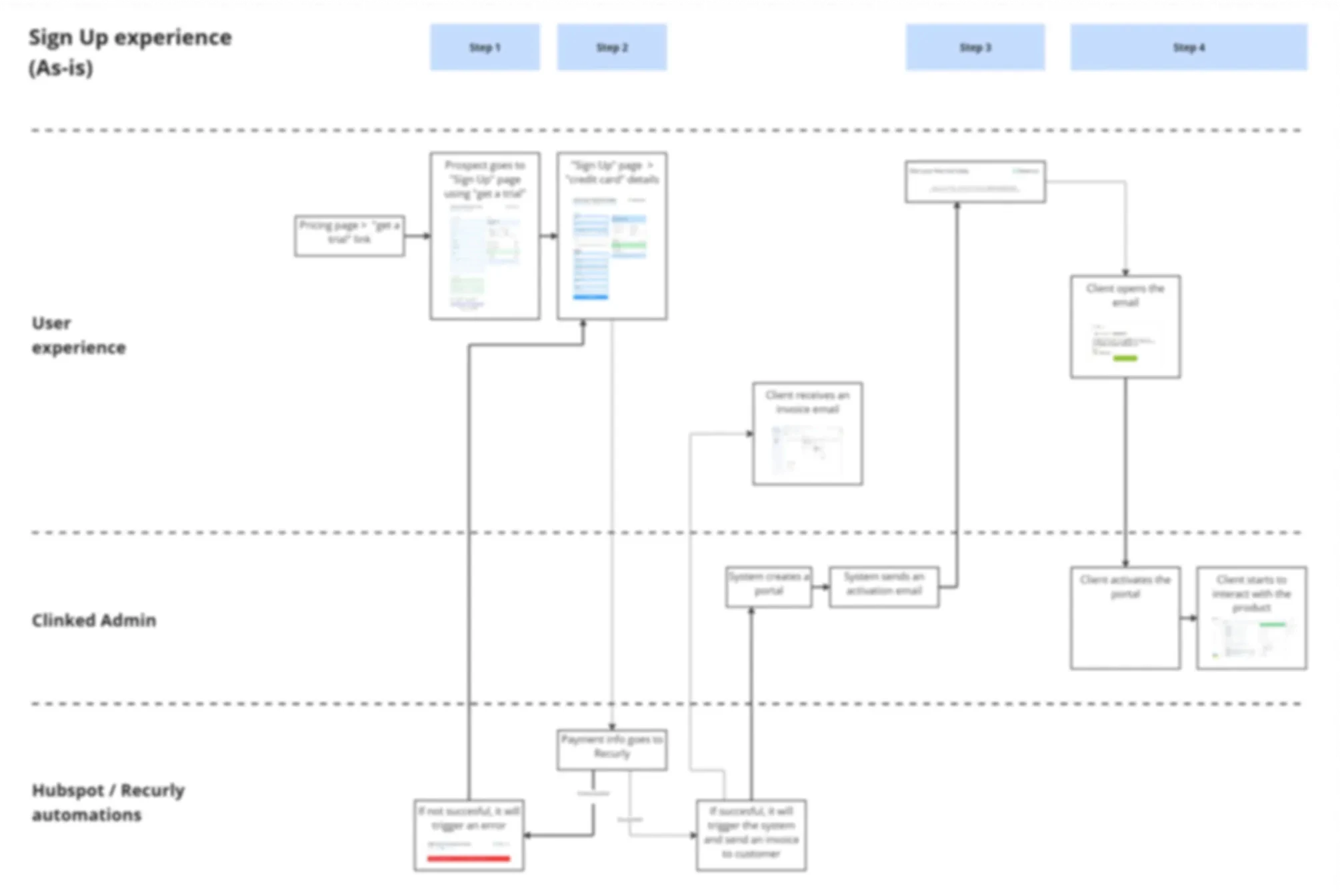
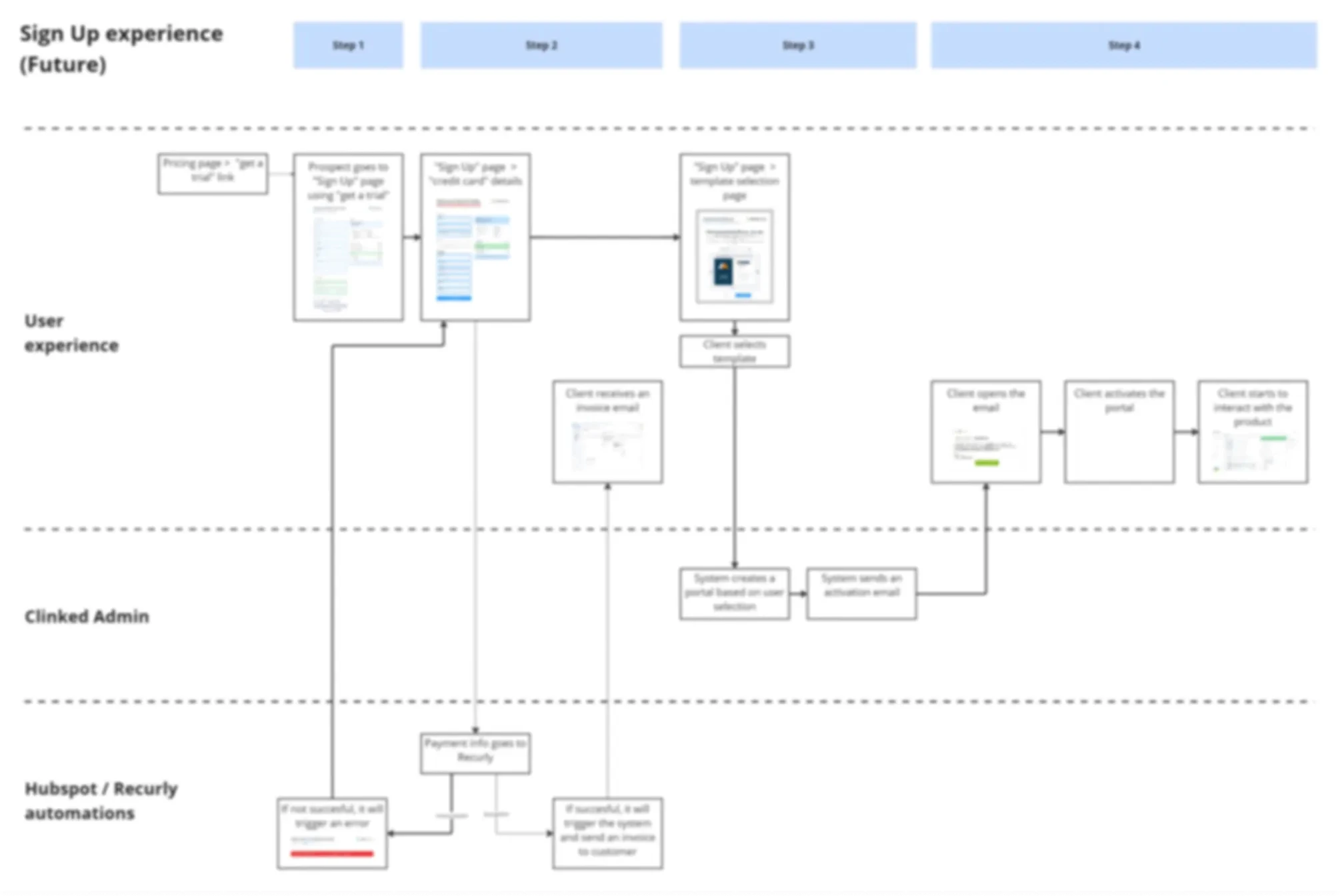
Above: Future state [trialists flow]
Problem
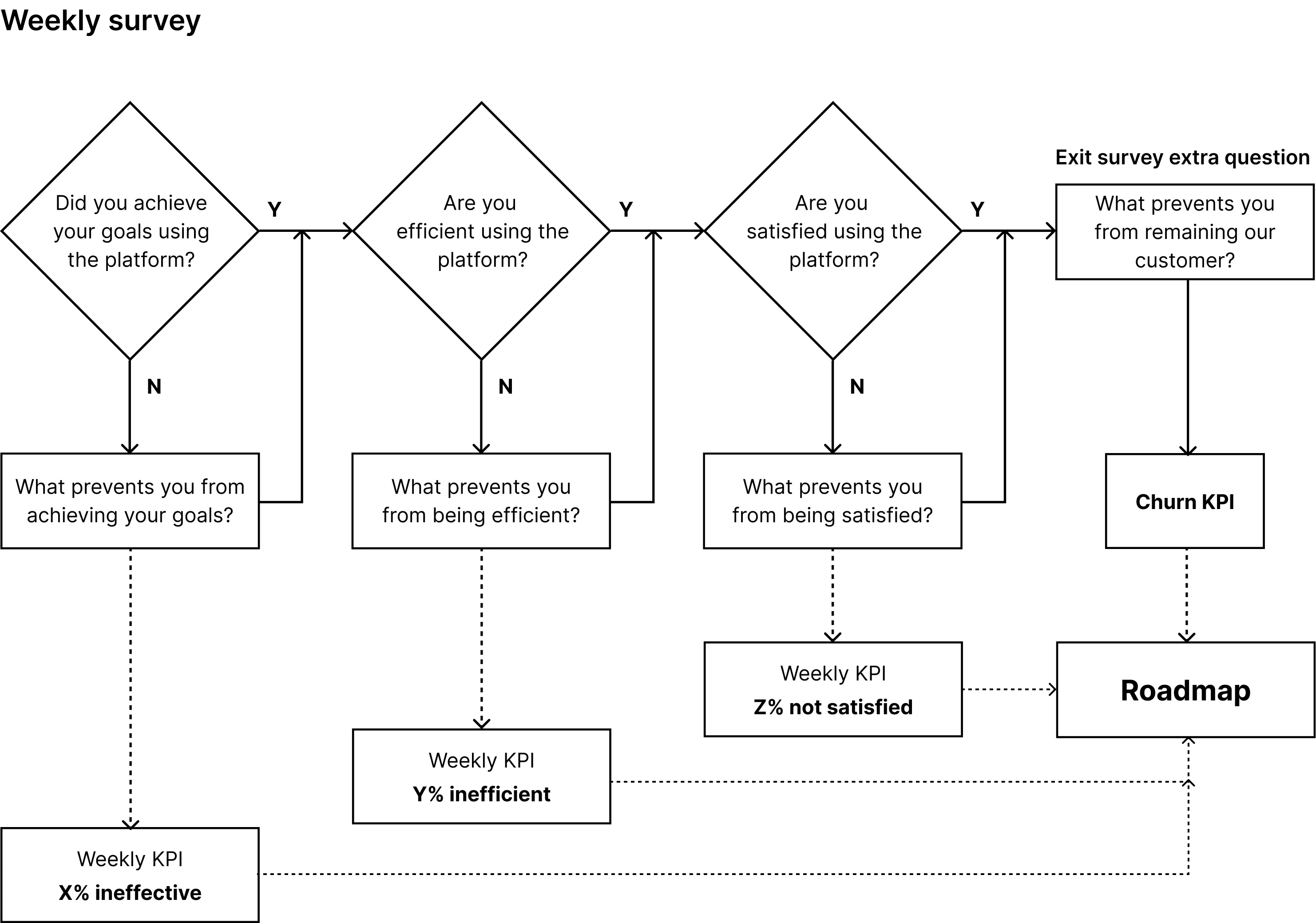
Client feedback was collected mainly at exit, when it was too late to intervene.
Solution
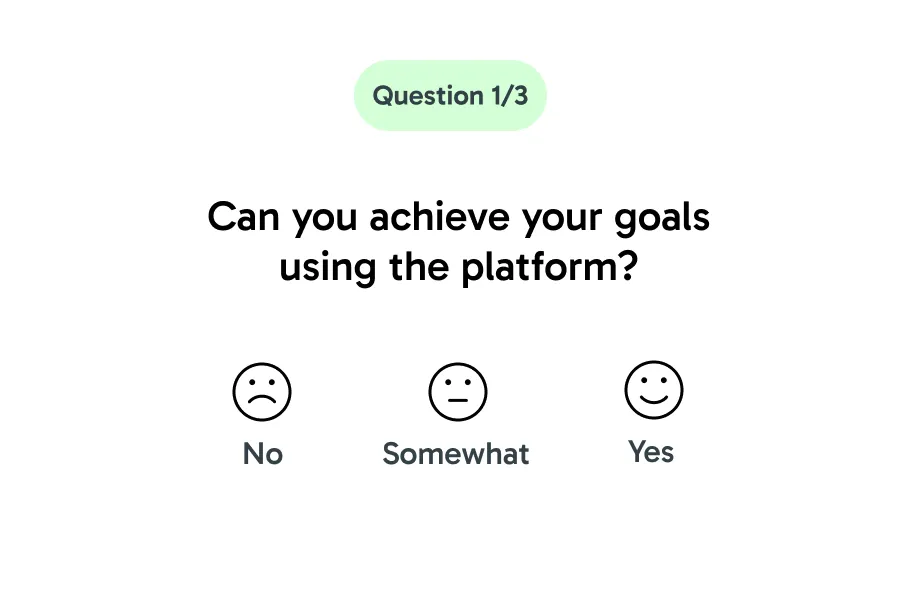
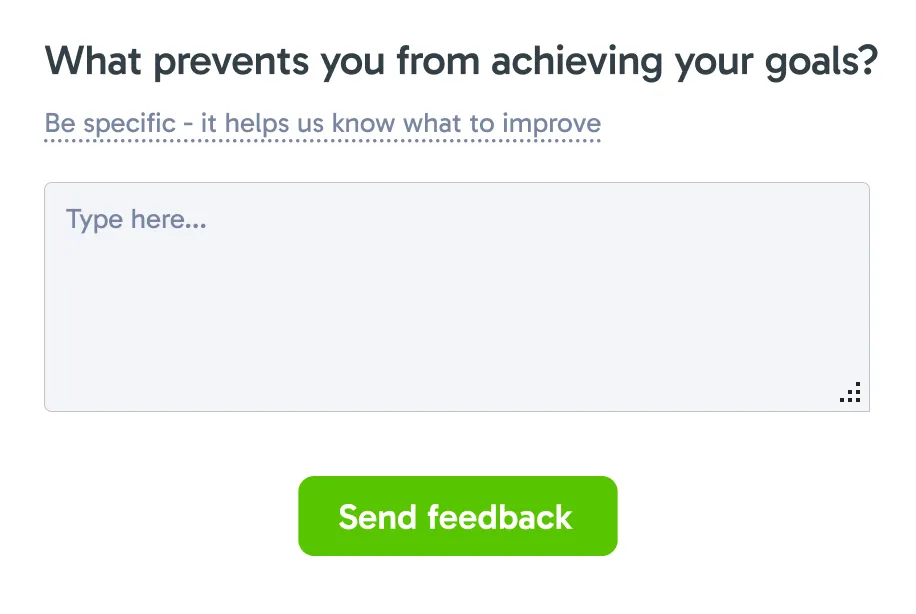
I designed and helped launch a recurring check-in on effectiveness, efficiency, and satisfaction.
Outcome
How it works: a fast “yes” happy path; and free-text only when issues arise. PM receives a weekly KPI on service quality and links to issues, to be linked to Rodmap.
Clinked Client Portal — SaaS
Improving the Product Experience
An example of weekly usability improvement [KPI]: I reduced screen 'waste' on active UI from 57% to 16%.
Problem
Clinked is a data-heavy product, but more than half of its UI was 'wasted' by non-essential areas.
Solution
Collapsible non-frequent panels resulted in 3x reduction of wasted space (from 57% before, to 16% after).
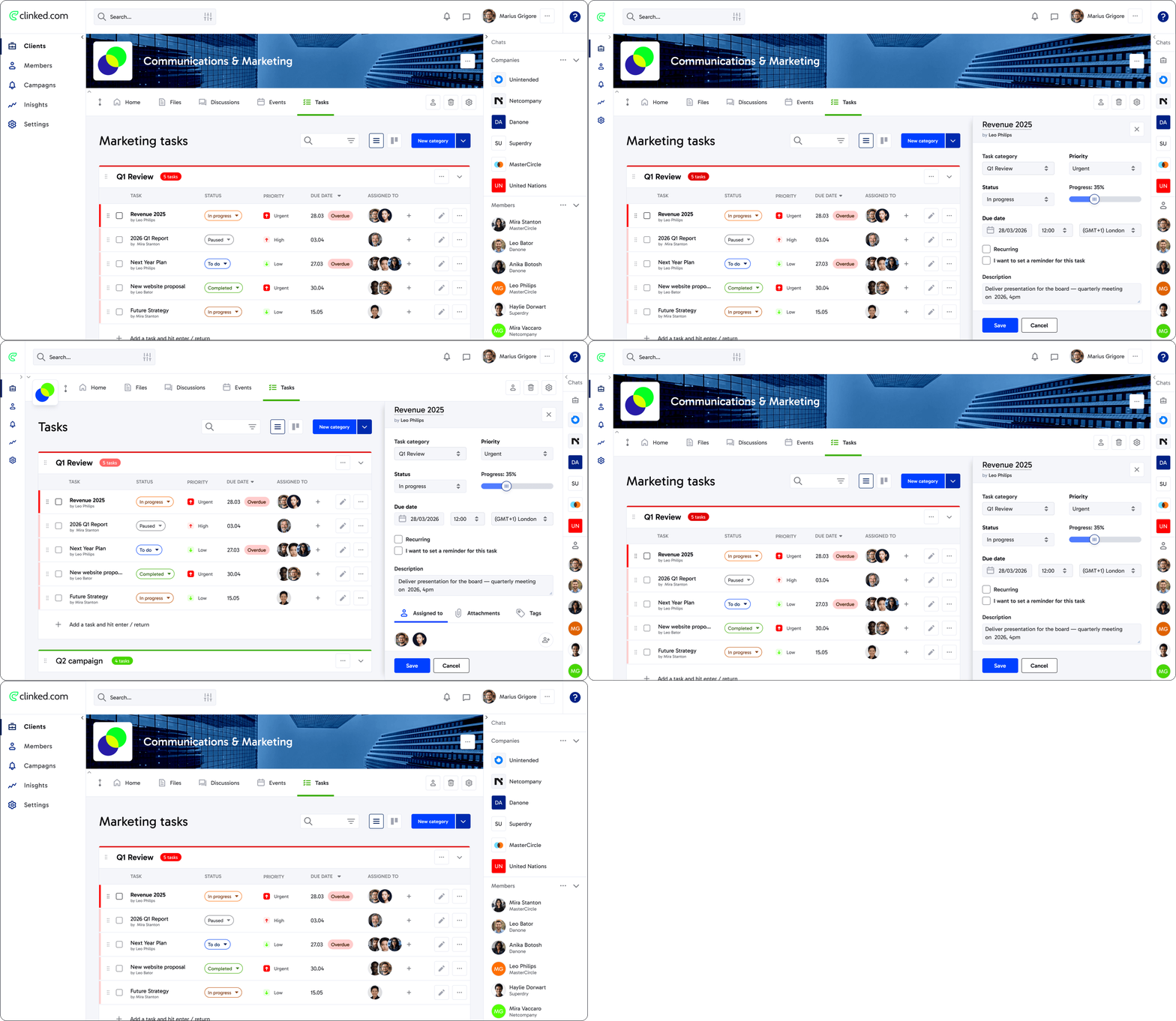
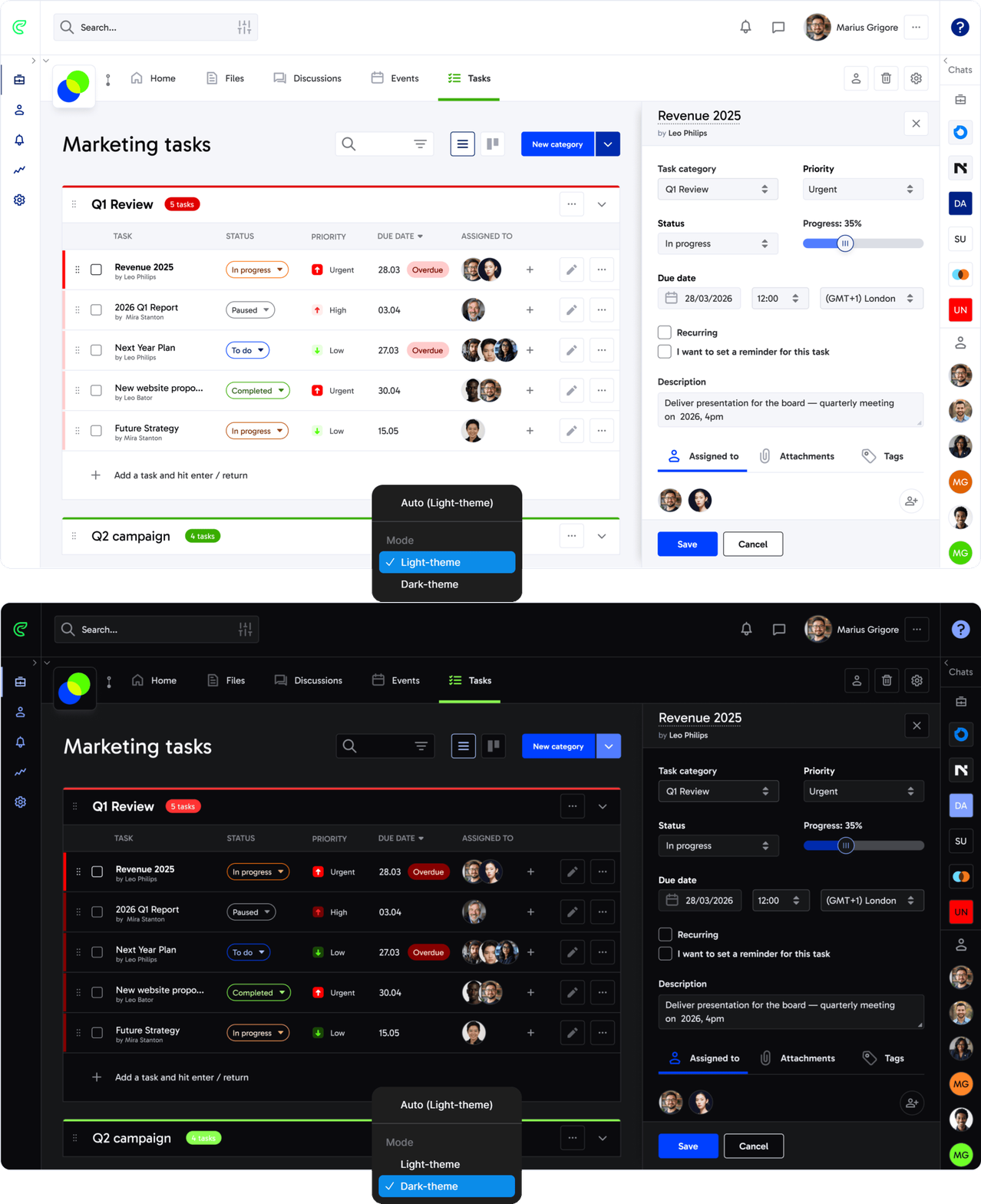
Above: Tasks is a key feature of Clinked that I helped improve and evolve (improving filtering & search; designing kanban and sub-tasks).
Problem
The mobile app had Android / iOS inconsistencies; and with the launch of web version v2, it became outdated.
Solution
Based on user feedback and usability reviews, I improved accounts context and added multiple new features.
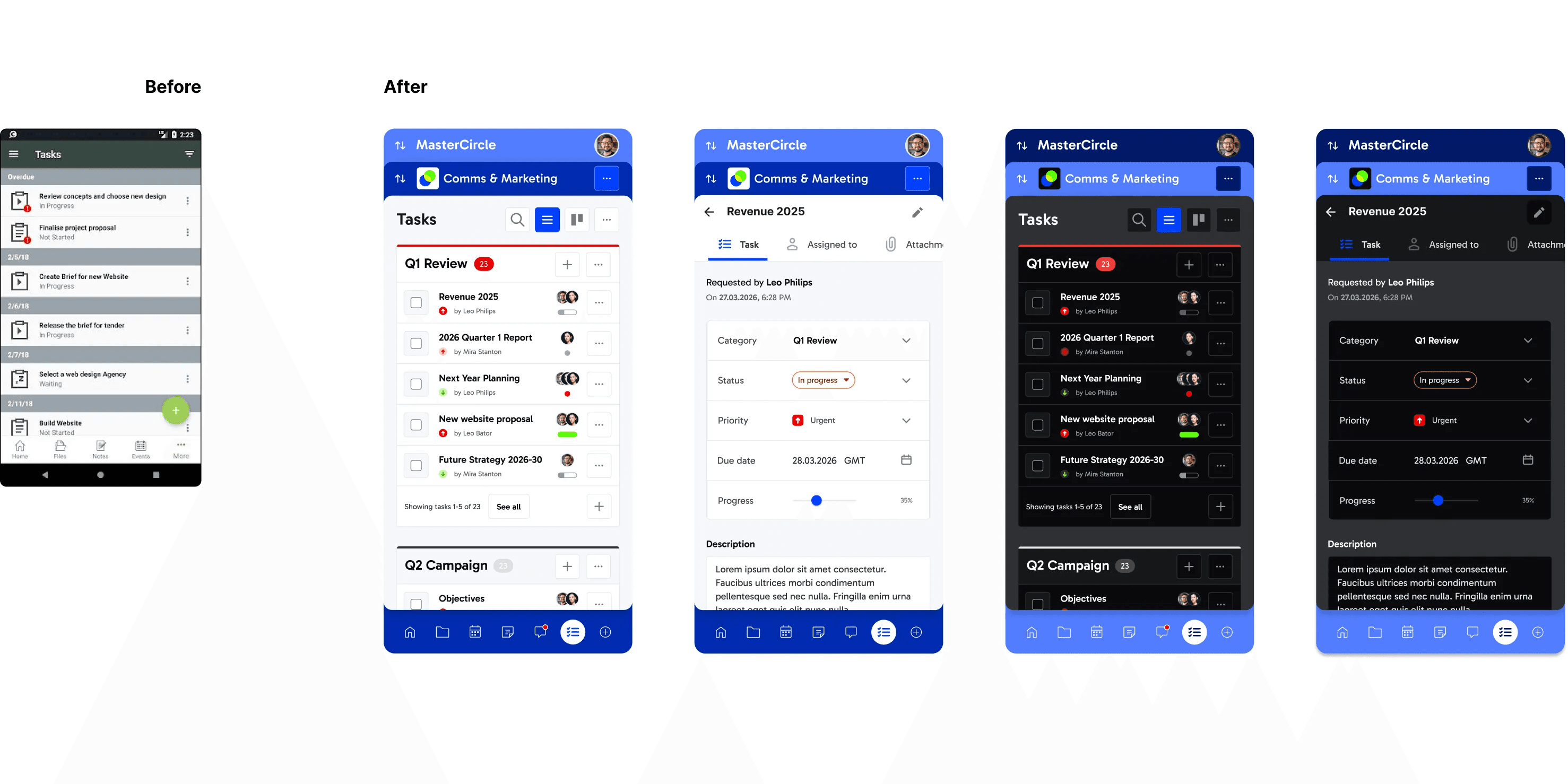
Above: Improvements were based on a usability audit on existing app. Most significant wins: UI, navigation, Kanban, account & group context.
Custom M&A platform built on Clinked — SaaS
Leading delivery on new products
Challenge: "Build a custom M&A platform on top of Clinked — we want it better than product X on sub-tasks with dependencies"
Role: Sole designer. Requirements, UX Research, Product Design & Management
Contribution & achievements
Validated design hypothesis against client success criteria with usability testing on a benchmark prototype across key tasks (interviews with representative users (domain experts)).
Problem
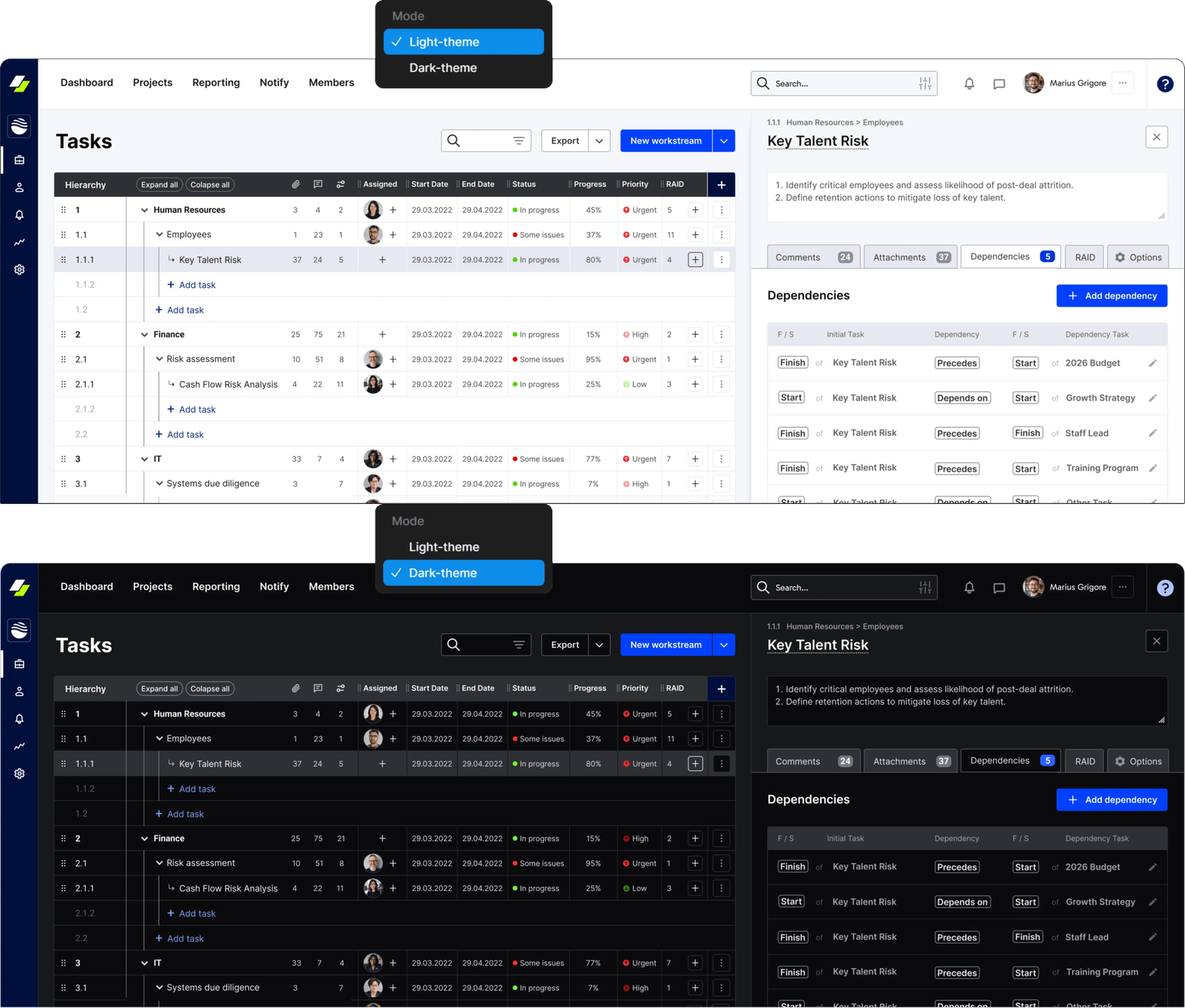
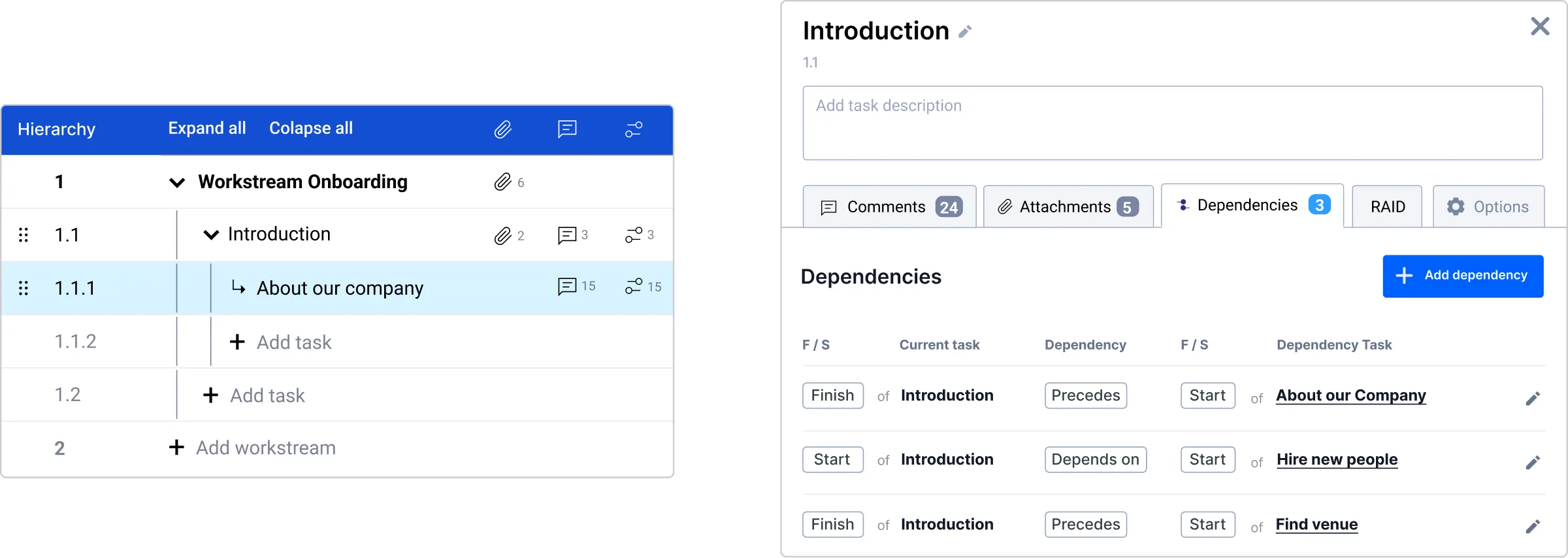
Multi-level sub-tasks with dependencies was a feature we had to build from scratch, and a risky one — users were domain experts with specific needs.
Approach
Research & testing on key tasks with representative users on existing products (client's benchmarks). Based on insights, I then built and tested a prototype (next section).
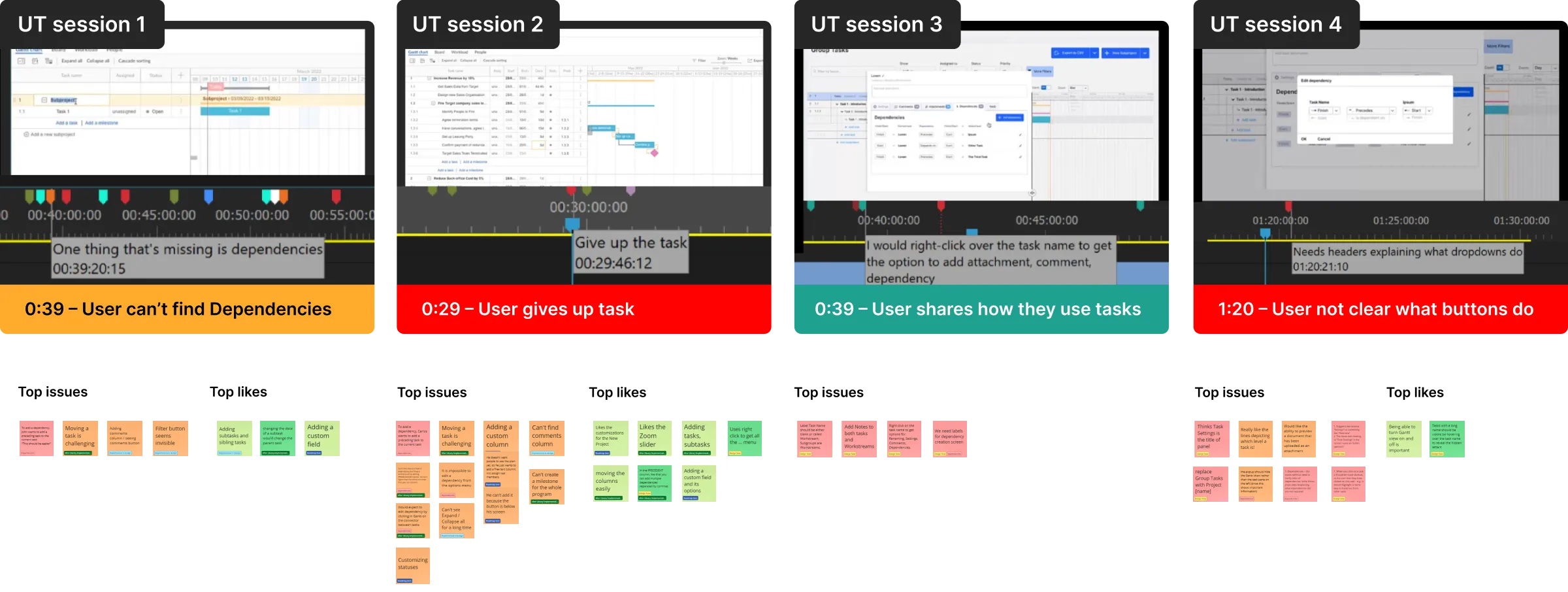
Above: Usability testing insights from representative users, using an existing competitor product as a benchmark for success criteria.
Production-ready interactive prototype — Final UI validated designs for multi-level tasks with dependencies, ready for production.
Challenge
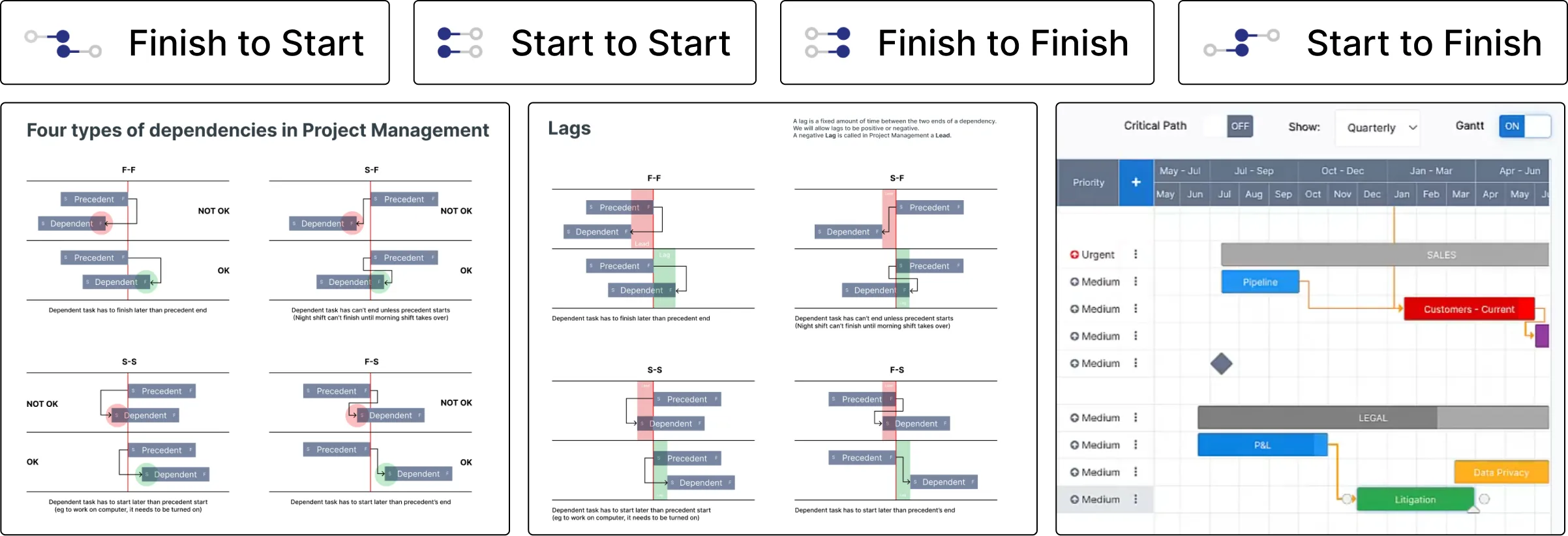
The 'four types of dependencies with lags' are complex and confusing even for M&A experts. I had to make sure Dev is 100% clear on the conceptual model.
Approach
I've created instructional videos and interactive prototypes to demonstrate the expected experience both conceptually and as Interaction Design in Gantt view.
Feedback & Roadmapping product — SaaS
Extending Clinked revenue with add-on products
Challenge: "Build, with minimal resources, a feedback software for us, that we can sell, too."
Role: Sole designer in a team of two (designer & developer).
Contribution
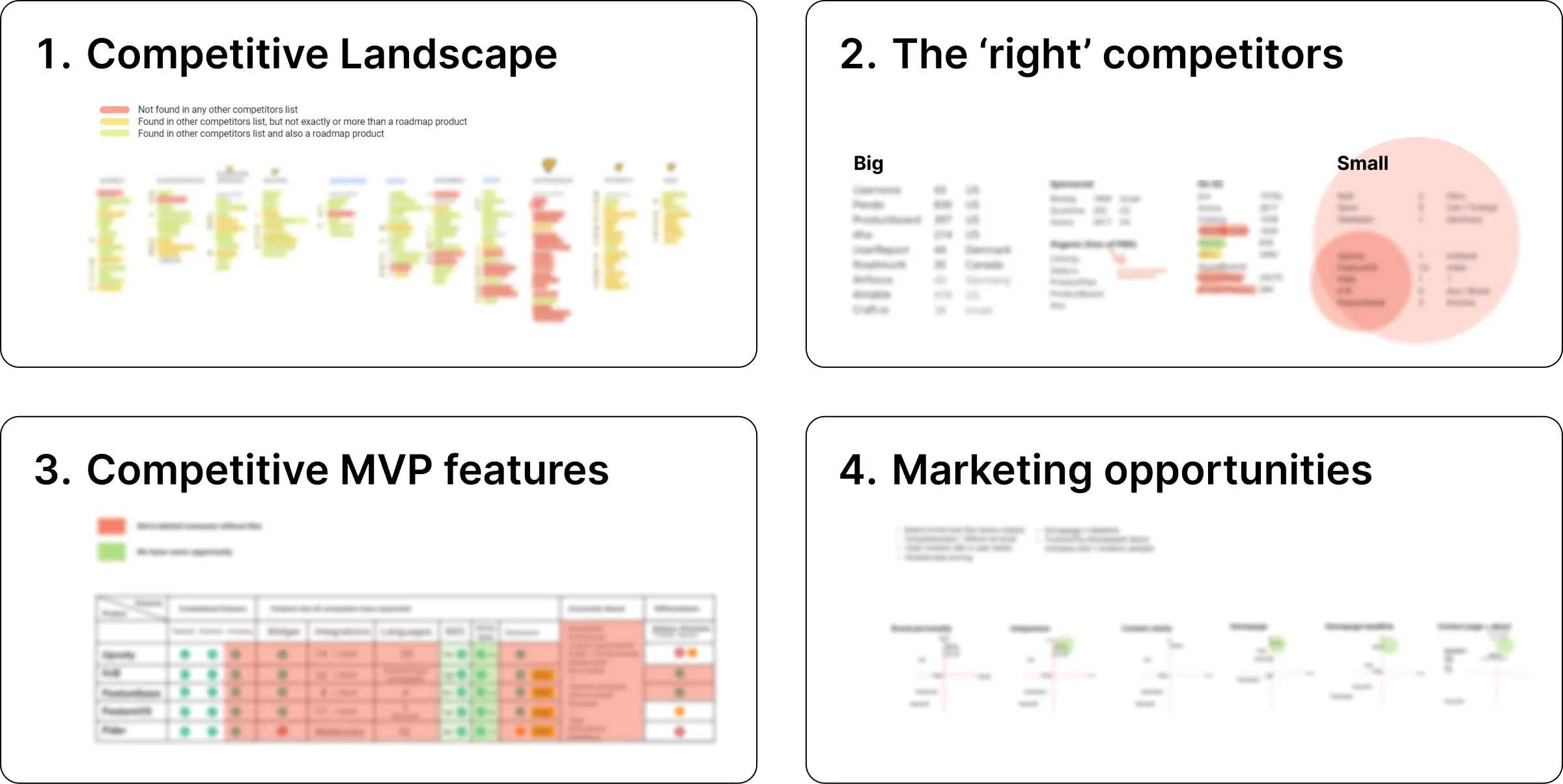
Competitive market research to determine the right competitors.
Workshop — feature scoping for MVP.
Product, UI and website design.
3 rounds of usability fixes on a live MVP.
Desk research to determine realistic business capability constraints. Workshop facilitation to choose the right niche and to scope an MVP of features.
Main Product UI after three rounds of usability fixes on a live MVP.
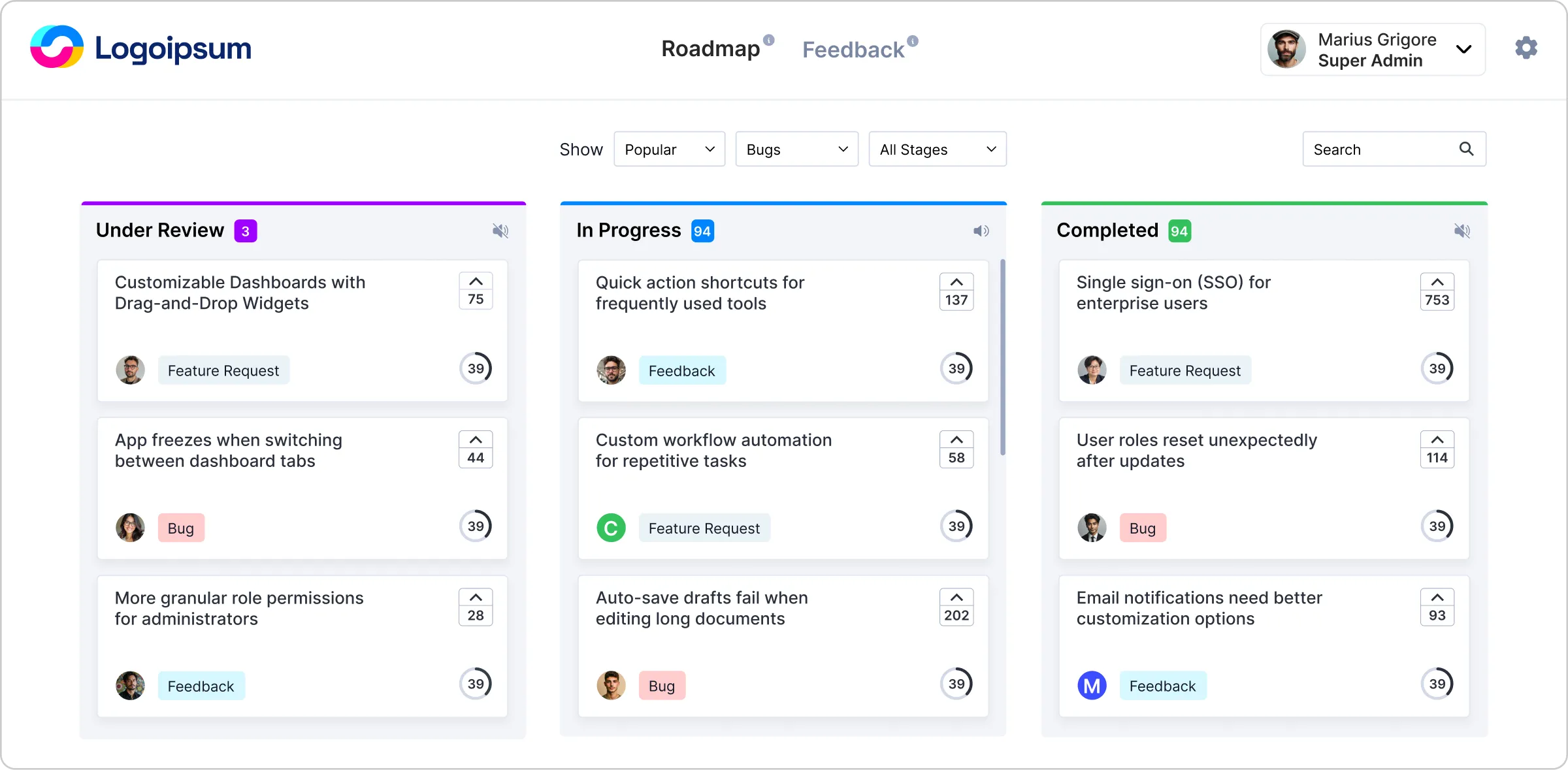
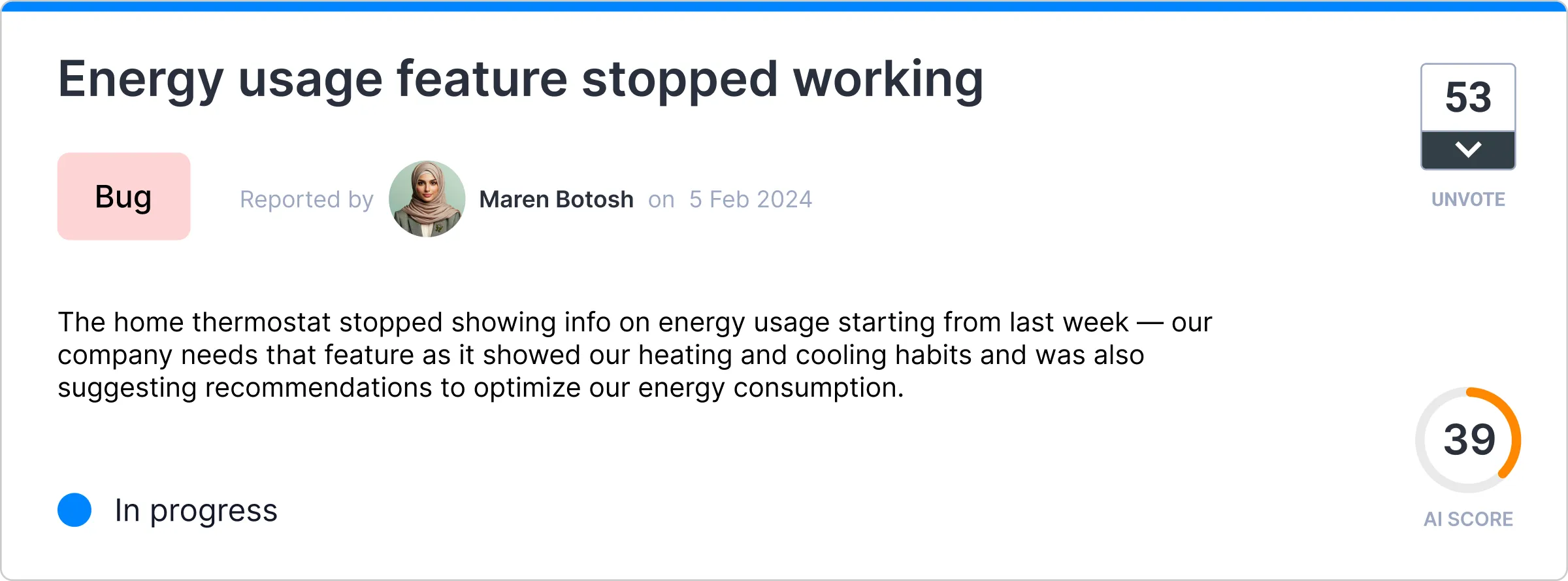
Feedback card UI in detail page view. The AI score is a customizable synthesis of company strategy drivers, feasibility, and internal roadmap.
Too see a full design process, read Improving existing products or User centred design for new products.