Pre-sales discovery: from one week to one meeting
Summary: Designed a structured discovery presentation and DIY workshop to eliminate weeks of unpaid pre-sales effort — turning an open-ended conversation into a one-hour qualification meeting.
Challenge
It takes time and effort for a software company to understand how much budget a prospect is willing to invest for a custom feature, especially when they don't have their requirements in a prototype format.
Solution
I designed a structured discovery presentation and workshop, with the purpose to eliminate the time we spent on discovery efforts without payment or a signed agreement. It's a DIY-requirements tutorial for prospects, with the option to 'buy' our Discovery Workshops.
1/3 — Identify and Reduce Project Risks
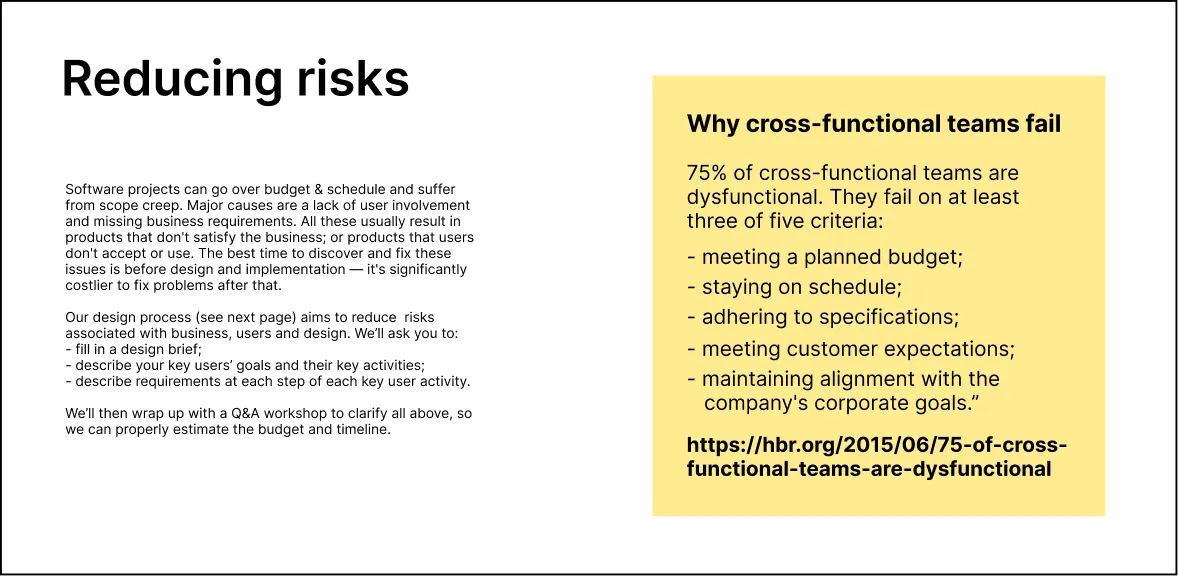
Reducing risks
Clarifies the most common risks in software projects caused by unclear assumptions, undefined scope, and misaligned expectations.
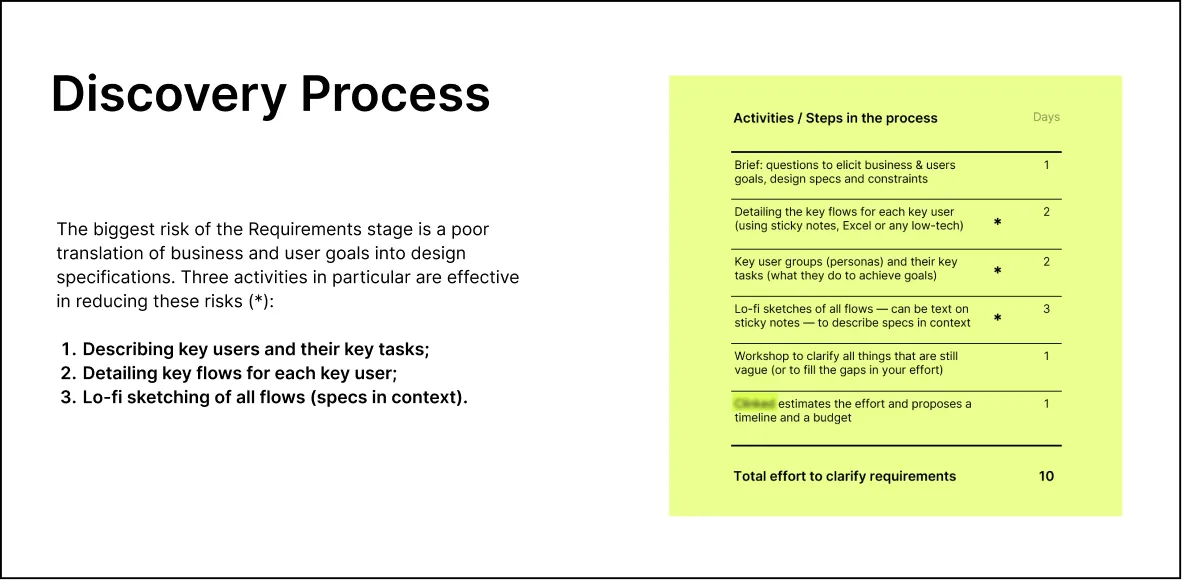
Discovery process
Introduces a structured, time-boxed Discovery process expressed in days, making effort and cost explicit and predictable.
2/3 — Define Users, Goals, and Activities
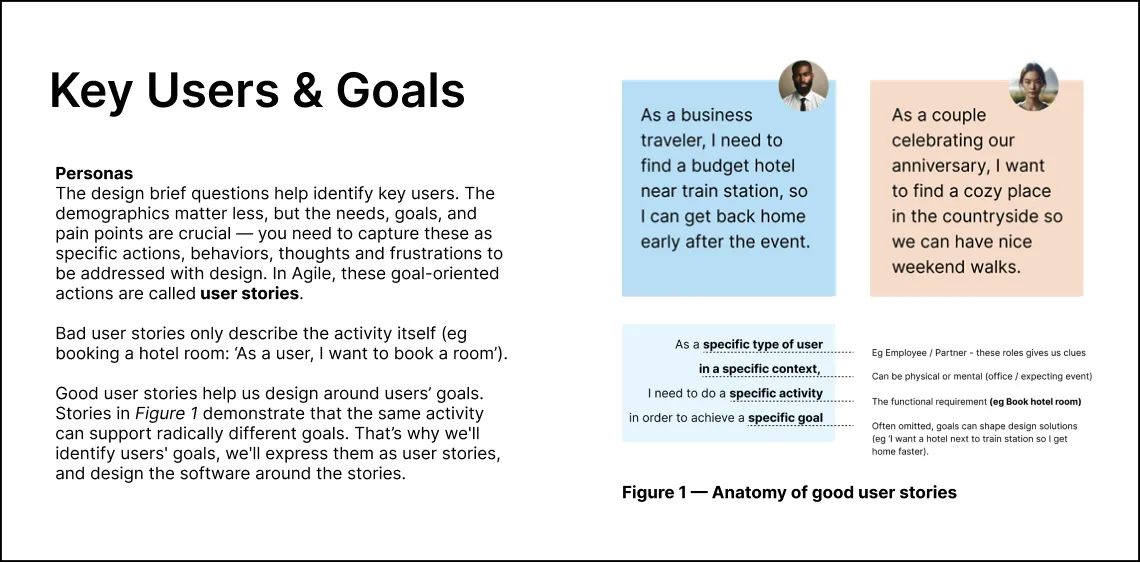
Key users & goals
Establishes meaningful user groups and goal-driven personas to ensure requirements are grounded in real usage, not assumptions.
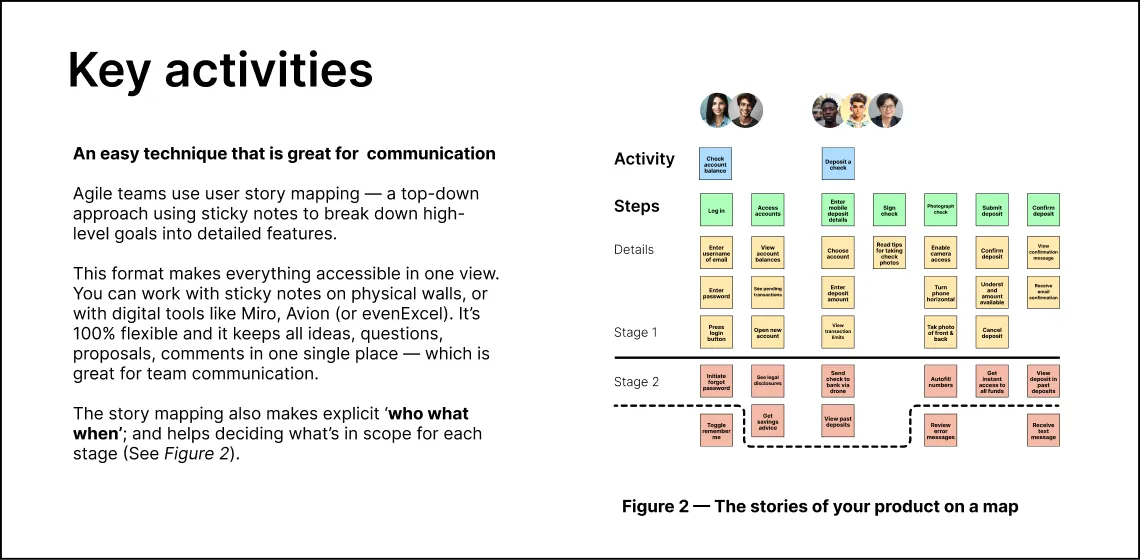
Key activities
Uses user story mapping to break work into activities, steps, and priorities, forming an early, realistic roadmap.
3/3 — Sketch and Validate Before Building
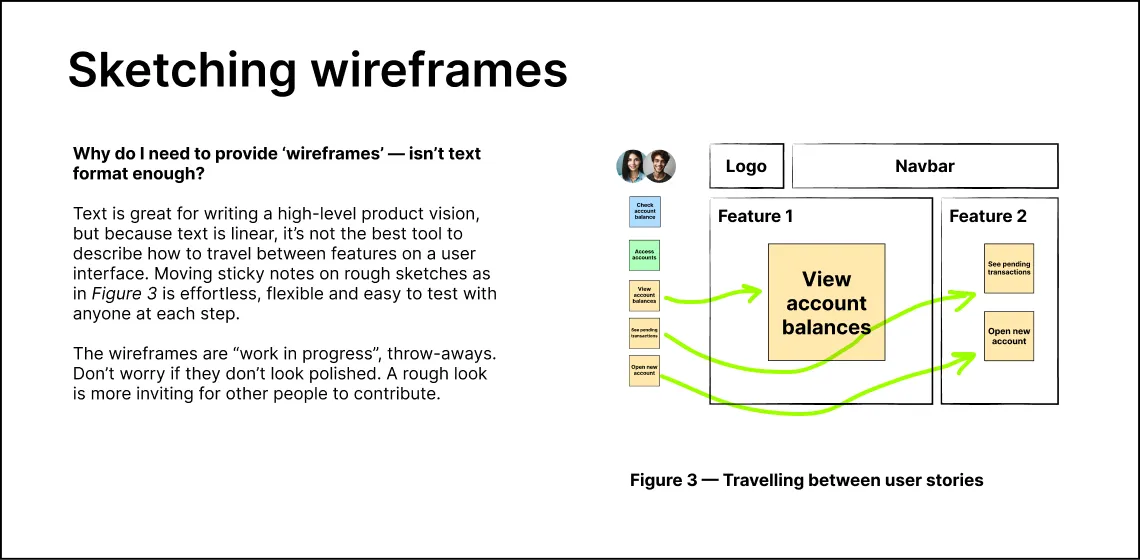
Sketching wireframes
Translates activities into low-fidelity interaction sketches focused on information flow and required features, not visual design.
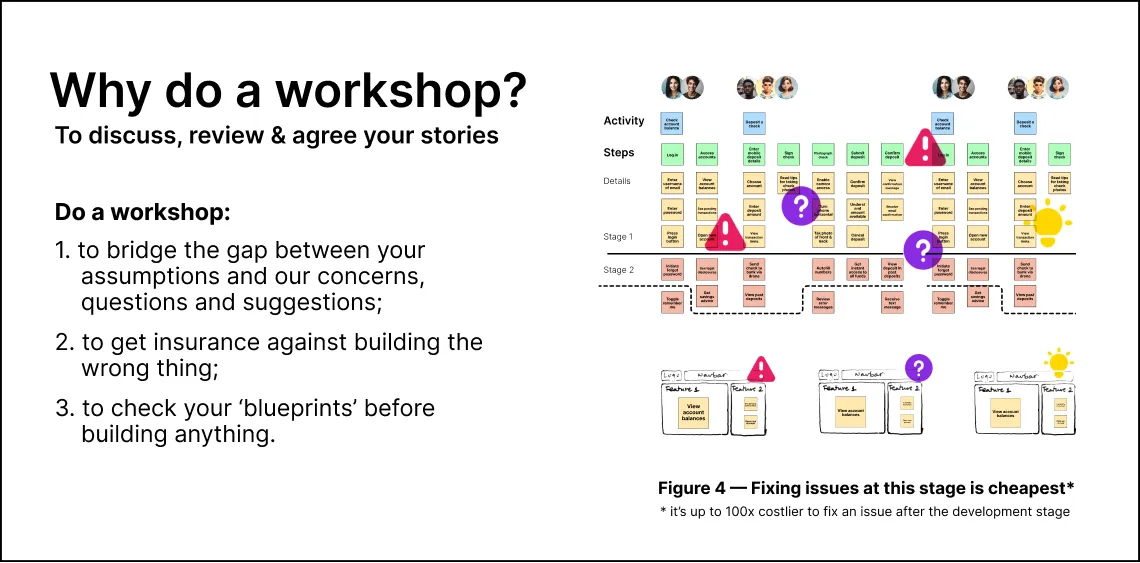
Workshops
Validates assumptions and blueprints with stakeholders before development begins, reducing the risk of building the wrong thing.
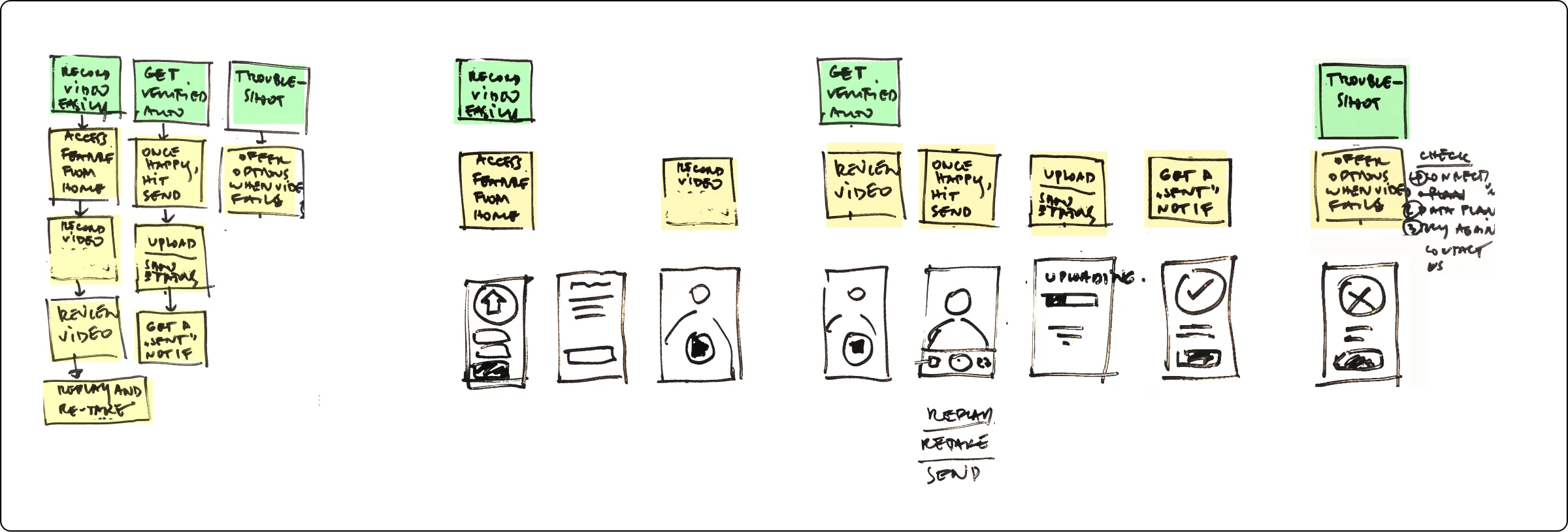
Example: one hour validation workshop for a feature
Story mapping
Story mapping reveals WHO WHAT WHEN. It's an inventory in written form and serves as a great in-context design brief and inventory for the next step -> sketching low-fi wireframes.
Sketching lo-fi wireframes
With our resulted "brief" next to the mock-up screens, we can focus on sketching the minimum neccesary interaction design elements that lets us achieve our persona needs and goal.